 Fansipan
“What is Sapa like in November?”
“Will there be snow on the summit in January?”
“When do the rice terraces turn gold?”
January to December at a glance
Daytime highNight lowRainRecommended monthsGolden rice terracesMonths when snow is possible
Averages over many years. The Fansipan summit is about 9°C colder.
- Recommended months
- Golden rice terraces
- Months when snow is possible
| Month | Season | Sapa day/night | Summit day/night (est.) | Rain (mm) |
|---|---|---|---|---|
| Jan | Dry | 12°/6° | 3°/-3° | 70 |
| Feb | Dry | 14°/8° | 5°/-1° | 74 |
| Mar | Dry | 18°/11° | 9°/2° | 105 |
| Apr | Rains begin | 21°/14° | 12°/5° | 213 |
| May | Rainy | 22°/16° | 13°/7° | 341 |
| Jun | Rainy | 23°/18° | 14°/9° | 381 |
| Jul | Rainy | 23°/18° | 14°/9° | 461 |
| Aug | Rainy | 23°/17° | 14°/8° | 452 |
| Sep | Rainy | 22°/16° | 13°/7° | 303 |
| Oct | Dry begins | 19°/14° | 10°/5° | 201 |
| Nov | Dry | 16°/10° | 7°/1° | 106 |
| Dec | Dry | 13°/7° | 4°/-2° | 66 |
See Fansipan summit weatherSee Sapa weather
The summit has no weather station, so its figures are Sapa’s minus about 9°C. Sapa has a dry season (October to March) and a rainy season (April to September).
Sapa’s seasons at a glance
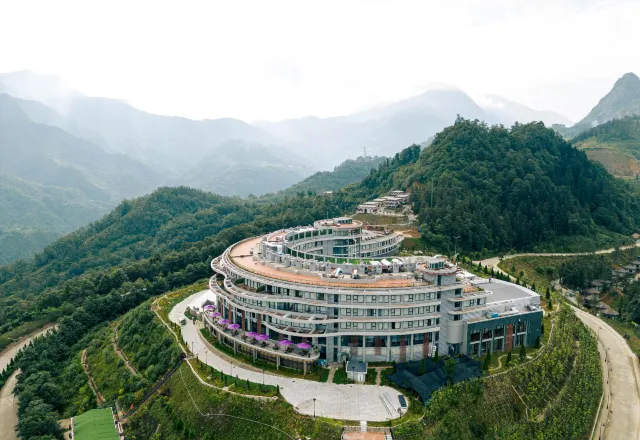
Sapa is a mountain town at about 1,500 m, a world away from hot Hanoi. Go up to the 3,147 m summit of Fansipan and the temperature drops once more.
- Clear skies and trekking: March, April, November, December. Little rain or long sunshine, so the best chance of a view from the top.
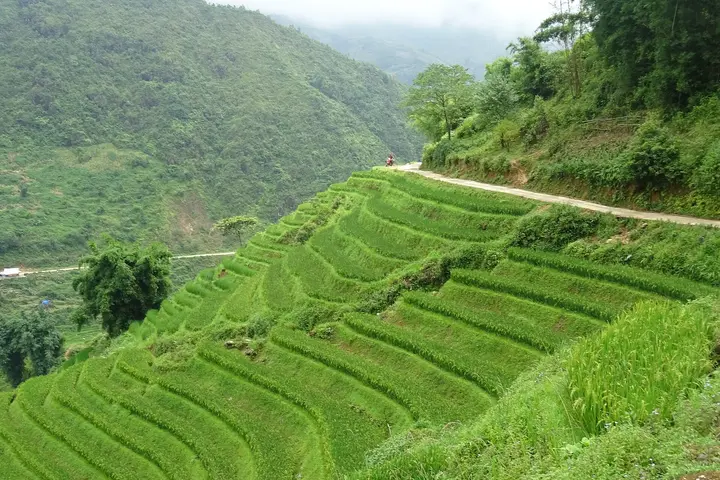
- Golden rice terraces: mid-September to October, when the fields ripen before the harvest.
- Mirror terraces: May and June, when the fields are flooded for planting and reflect the sky.
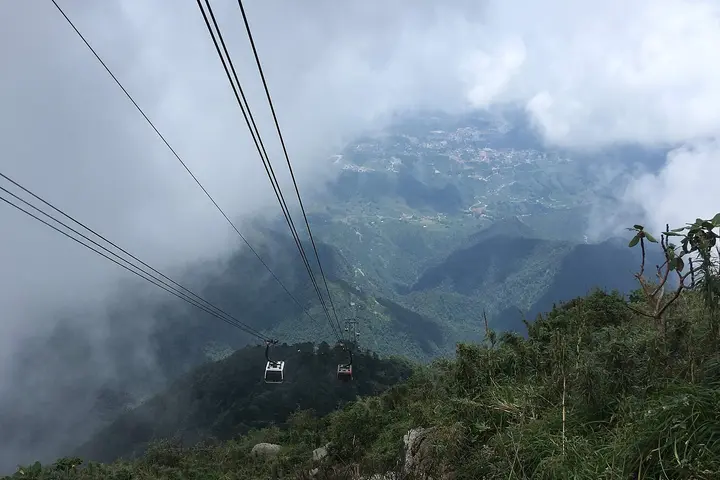
- Expect rain: July and August, the wettest months, when the summit is often lost in cloud.
Weather and what to wear, month by month
January: the coldest month, frost on the summit
- Temperature: Sapa around 12°C by day, 6°C at night. The summit drops below freezing.
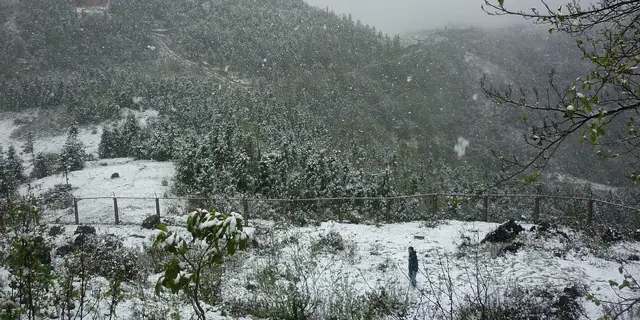
- Weather: The coldest month of the year, with a bone-deep mountain chill; the record low is -4.2°C (January 2016). Rain is light, but grey, damp days are common. The summit can be coated in rime ice, and now and then real snow falls.
- What to wear: a long down jacket, scarf, gloves and fleece-lined base layers.
February: pink peach blossom
- Temperature: Sapa around 14°C by day, 8°C at night. Days soften, but mornings and evenings are still winter.
- Weather: Peach and plum blossom opens along the valleys. When the Lunar New Year (Tết) falls in February, Sapa gets busy and cable car fares can rise on some days.
- What to wear: a thick coat or light down jacket, plus a windproof shell for the summit.
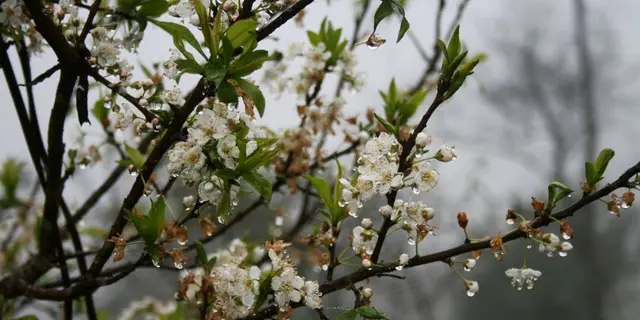
March: more sunshine, the start of trekking season
- Temperature: Sapa around 18°C by day, 11°C at night.
- Weather: Sunshine picks up noticeably. Before the rains, there is little rain and many clear days, so both trekking and the cable car are rewarding.
- What to wear: a light long-sleeve top or cardigan by day, a light down jacket for evenings and the summit.
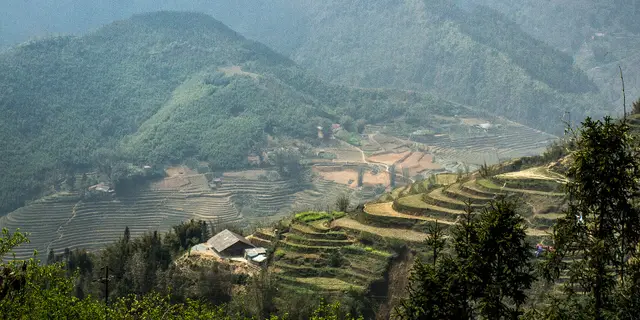
April: Sapa’s best walking weather
- Temperature: Sapa around 21°C by day, 14°C at night.
- Weather: The sunniest month of the year (about 168 hours). Perfect for village lanes and valley walks. Late in the month, showers can pass through in the late afternoon, so take the cable car early in the day.
- What to wear: a light shirt, comfortable trainers and a windbreaker.
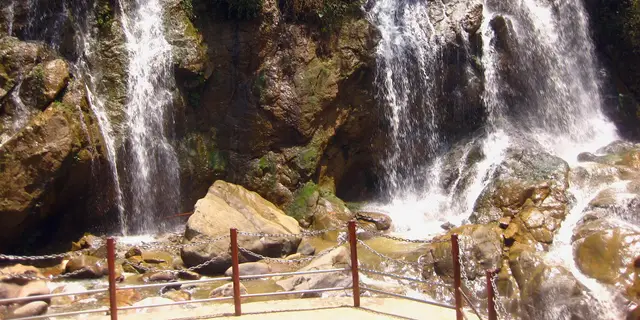
May: mirror terraces
- Temperature: Sapa around 22°C by day, 16°C at night. T-shirts work by day.
- Weather: Water is let into the dry fields for planting, a time Vietnamese call Mùa nước đổ, the season of pouring water. The hillside terraces mirror the sky and clouds, a favourite for photographers. The rains do pick up now.
- What to wear: breathable summer clothes, a packable rain jacket and shoes with grip.
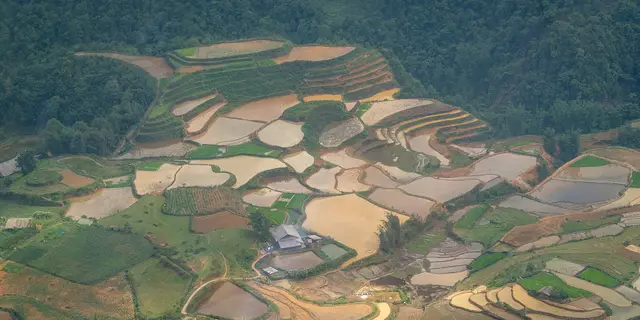
June: deep green and passing showers
- Temperature: Sapa around 23°C by day, 18°C at night, far cooler than Hanoi.
- Weather: Many Vietnamese come up to escape Hanoi’s heat. It is the rainy season, with rain on over 20 days, but more often heavy showers that clear than all-day rain. Muddy trails make long treks a poor idea.
- What to wear: T-shirts, a waterproof jacket and quick-drying clothes.
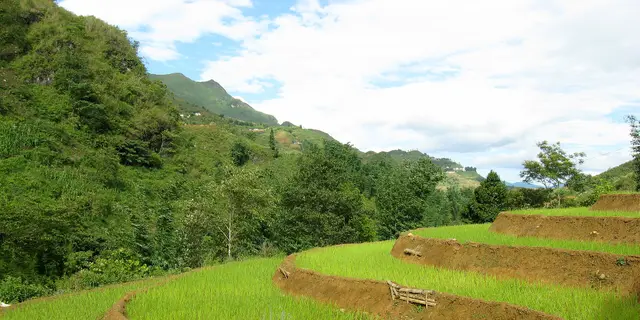
July: the wettest month
- Temperature: Sapa around 23°C by day, 18°C at night. Cool but very humid.
- Weather: About 460 mm of rain, the most of the year. The summit is often wrapped in thick cloud with nothing to see. Unless you can stay a while and wait for a clear spell, plan carefully.
- What to wear: a waterproof jacket, a rain poncho and plenty of spare socks.
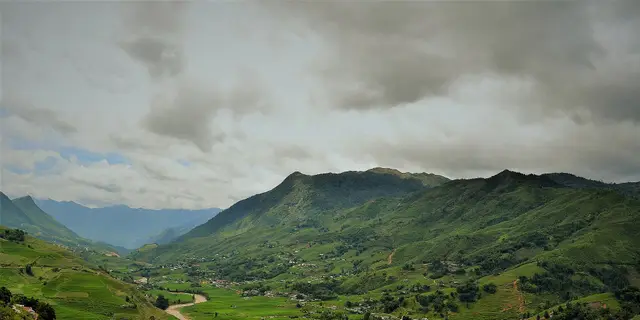
August: lush green, careful on mountain roads
- Temperature: Sapa around 23°C by day, 17°C at night, a cool mountain summer.
- Weather: As wet as July. The slopes are at their greenest, but long rain can close mountain roads or wash soil onto them. Better for hotels and cafés in town than remote tours. Check road news before you set off.
- What to wear: a light long-sleeve top and a waterproof layer for wind and rain.
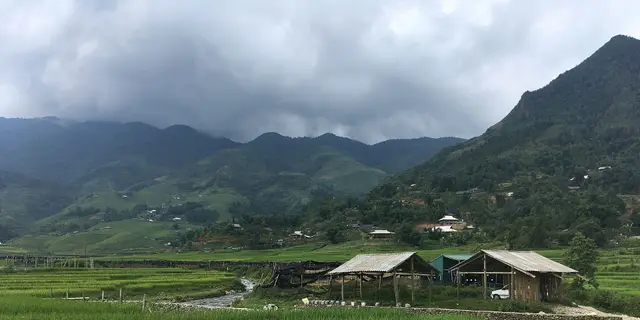
September: Sapa’s highlight, the hills turn gold
- Temperature: Sapa around 22°C by day, 16°C at night.
- Weather: The rain starts to ease, and from mid-month the terraces ripen to gold. This is the golden Sapa from the guidebooks. It is still the tail of the rainy season, so humidity is high and mornings and evenings are often misty.
- What to wear: light autumn clothes and a layer for cool mornings and evenings.
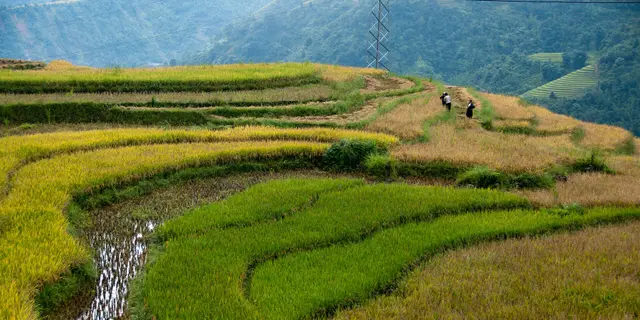
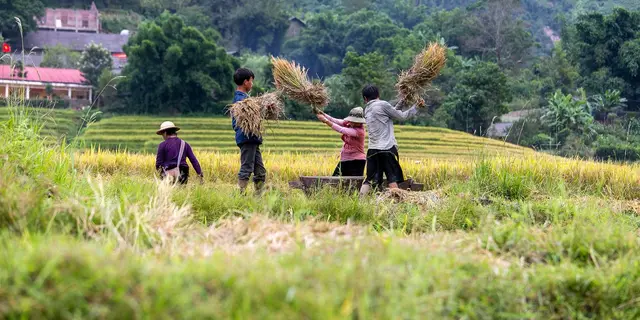
October: harvest time and cool autumn walks
- Temperature: Sapa around 19°C by day, 14°C at night, with bigger swings between day and night.
- Weather: The harvest continues and the fields grow quiet. There is much less rain than in September, good for walking, but humidity is the highest of the year, so clear and misty days alternate. On a clear day the sky and ridges open up; the summit feels like early winter, so dress warm.
- What to wear: a fleece, a sweatshirt and a light down jacket for the summit.
November: crisp late autumn, a month for views
- Temperature: Sapa around 16°C by day, 10°C at night.
- Weather: The dry season settles in. Rain falls away and humidity is among the lowest of the year, so clear days are common. A favourite month for cable car views from the top.
- What to wear: a warm coat, thermal base layers and a windproof outer layer.
December: cold, clear winter
- Temperature: Sapa around 13°C by day, 7°C at night. The summit drops below freezing at night.
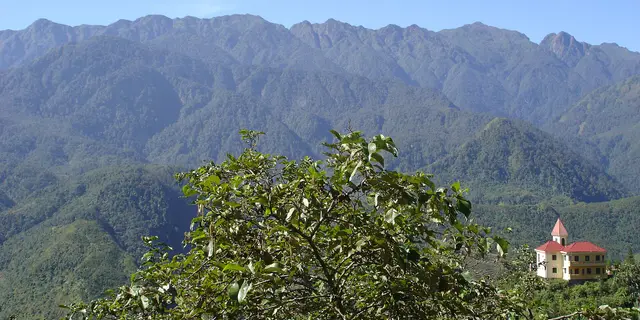
- Weather: One of the driest months of the year. The air is cold and clear, and on a fine day the summit shows ridge after ridge to the horizon. From mid-month some years bring frost or snow to the top. Sapa can be busy over the holidays.
- What to wear: a thick down jacket, a beanie, gloves and a flask for something warm.
Before you go: one thing to know about Sapa weather
Monthly temperatures and rainfall are only averages of past years. Fansipan can vanish into thick fog within ten minutes while Sapa town is sunny, and the other way round, the summit can rise above the clouds into blue sky while the town sits in mist.
So on your trip, the day’s forecast matters far more than the average. Before you go, check the hourly forecast for the summit on Fansipan summit weather and for town on Sapa weather. Still deciding when to go? See Best time to visit Sapa and Fansipan.